Brazil's 1994 triumph hinged on a single penalty shootout. France's 2018 win turned on a deflection and a goalkeeping error. World Cup finals are rarely decided by the sum of a team's talent—they're decided by the tiny, often ugly details that get magnified under 90 minutes of unbearable pressure. My World Cup Final prediction for 2026 starts with that uncomfortable truth: the team that wins will almost certainly not be the one playing the prettiest football.Look at the last five finals. Spain 2010 needed extra time against a Netherlands side that committed 28 fouls. Germany 2014 required a late substitute's goal after Argentina's defense had frustrated them for 113 minutes. France 2018 benefited from a first-half own goal and a VAR-awarded penalty. Each winner had a plan for the mess, not just the masterpiece. That's why my World Cup Final prediction leans toward a side with a hardened, pragmatic core—likely France or Argentina—rather than an emerging attacking powerhouse. France's depth is absurd: even without their first-choice midfield。they can field a destroyer like Manu Koné alongside a creator. Argentina, meanwhile。have mastered the dark art of slowing a game to their preferred tempo, a skill that becomes priceless in a final.Set pieces。specifically, will be the tiebreaker. In the 2022 final, Argentina scored from a penalty and a rebound;France scored twice from open play but also conceded from a set piece in the semifinal against Morocco. At the 2026 tournament, with expanded squads and more fatigue across a 48-team format, dead-ball situations will carry even more weight. I watched Villarreal's Europa League run last season—they scored 40% of their goals from corners and free kicks. That's not an accident;it's a coaching obsession. The team that wins the World Cup Final will have spent hours on near-post flick-ons and short-corner routines, not just on pressing triggers. If you're building a World Cup Final prediction model, weight set-piece efficiency higher than open-play xG. It feels wrong. It usually is right.
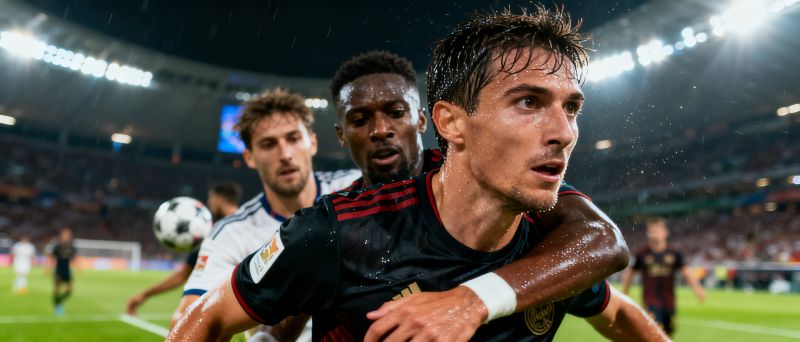
Player fatigue is the variable nobody wants to talk about. The 2026 final is scheduled for July 19 at MetLife Stadium—a venue with a natural grass surface that will have hosted eight matches in a month. The heat and humidity in New Jersey that time of year can push feels-like temperatures past 38°C. Finals played in such conditions tend to slow down after 60 minutes. That favors the team with a deeper bench and a manager willing to make early, unfashionable substitutions. Didier Deschamps did exactly that in 2018, bringing on Nabil Fekir and Steven Nzonzi to kill the game. Luis de la Fuente did it for Spain in Euro 2024, trusting Mikel Oyarzabal off the bench. My World Cup Final prediction: the winning coach will make a decisive substitution before the 75th minute。and it won't be a striker chasing a goal—it'll be a midfielder protecting a lead.So who lifts the trophy?
France. Their blend of athletic midfielders, a world-class goalkeeper in Mike Maignan。and a manager who has already won it once gives them the edge over Argentina's aging core and Brazil's defensive fragility. It won't be a classic. Expect a 1-0 or a 2-1 decided by a set piece or a counterattack that starts with a tactical foul in the 84th minute. That's not cynicism—it's pattern recognition. The World Cup Final rewards the team most comfortable with discomfort, and right now, no one wears that discomfort better than France.